
Somewhere between the fantasy of a cabin in the woods and the reality of building one, most people hit the same wall: nobody tells you which state actually lets you live this way. The best states for off grid living aren’t the ones with the prettiest listing photos, they’re the ones where the zoning office won’t shut you down, the water is legally yours to catch, and the sun actually shows up often enough to keep your batteries charged.
Ask around in homesteading forums and you’ll hear the same question phrased a dozen different ways: what states allow off grid living, what’s the easiest state for off grid living, or simply, what state should I even be looking at? The honest answer is that it depends on which tradeoffs you’re willing to live with but the data narrows the field fast.
This guide breaks down the states with the best off grid laws, the real costs of land and infrastructure, and the climate realities that separate a smooth transition from a miserable first winter. We’ll also cover the structural side of the equation, because even the most off-grid-friendly county in America won’t save you from a poorly built home.
The Core Elements of an Off-Grid Friendly State
Before you start hunting listings, it helps to understand what actually makes a location workable long-term. A gorgeous 20-acre parcel can turn into a legal headache fast if you don’t check these three things first.
Zoning & Building Codes
Zoning determines what you’re legally allowed to build and how. Land inside incorporated towns and cities almost always falls under strict building codes, minimum square footage, mandatory utility hookups, inspection requirements. Unincorporated land, which is county-governed rather than city-governed, is where most of the off-grid freedom actually lives.
Some rural counties are effectively “un-zoned,” meaning there’s no local zoning ordinance dictating dwelling size, setback distances, or construction method. That’s the golden ticket for anyone building a tiny home, yurt, or modular cabin without fighting a permitting office for a year.
Water Rights & Rainwater Harvesting
Water law in the U.S. splits into two systems. Riparian rights, common east of the Mississippi, generally let landowners collect and use rainwater and surface water on their own property with few restrictions. Prior appropriation, the dominant system across much of the arid West, treats water as a state-allocated resource meaning your right to catch rain or divert a stream can be limited by who claimed that water first, sometimes decades ago.
Solar & Climate Feasibility
Peak sun hours, the average number of hours per day when sunlight is strong enough for solar panels to produce at rated capacity, is the number that actually matters for an off-grid energy budget, not just the number of “sunny days” a state claims. High-desert states like New Mexico regularly deliver 300+ sunny days a year, while Alaska’s brutal winter light deficit forces a heavier reliance on backup generation.
According to World Population Review’s 2026 state rankings on off-grid friendliness, states are increasingly scored on a composite of legal flexibility, land affordability, and climate resilience, not any single factor alone. The International Code Council’s guidelines on minimum dwelling size are also worth checking county-by-county, since some jurisdictions adopt ICC rules wholesale while others carve out exemptions for alternative and modular dwellings.
Top 5 Best States for Off-Grid Living
Here’s where the data gets specific. These five states consistently rank among the best states to live off grid, based on legal flexibility, land cost, and climate but each comes with a real tradeoff worth knowing before you buy.
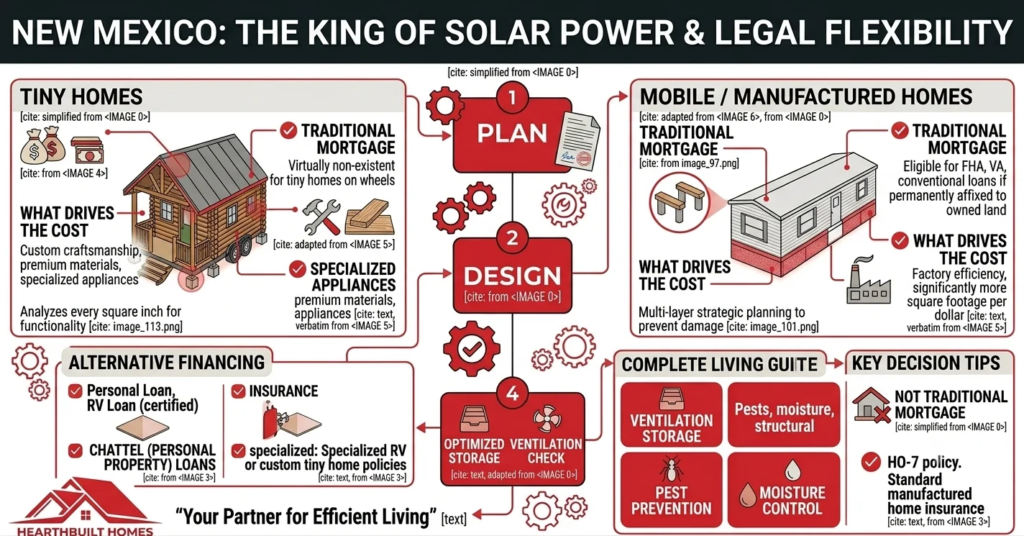
New Mexico: The King of Solar Power & Legal Flexibility
New Mexico is hard to beat if energy independence is your top priority. High-desert terrain delivers over 300 sunny days a year, and county-level building rules in rural areas are some of the most relaxed in the country.
- Rural pasture and farmland can run as low as $600 per acre in remote pockets, making it one of the cheapest entry points for large acreage.
- Many rural counties impose few restrictions on modular, manufactured, or owner-built structures.
- The tradeoff is water: rights follow prior appropriation law, and most homesteads need a drilled well or a serious rainwater catchment and hauling system.
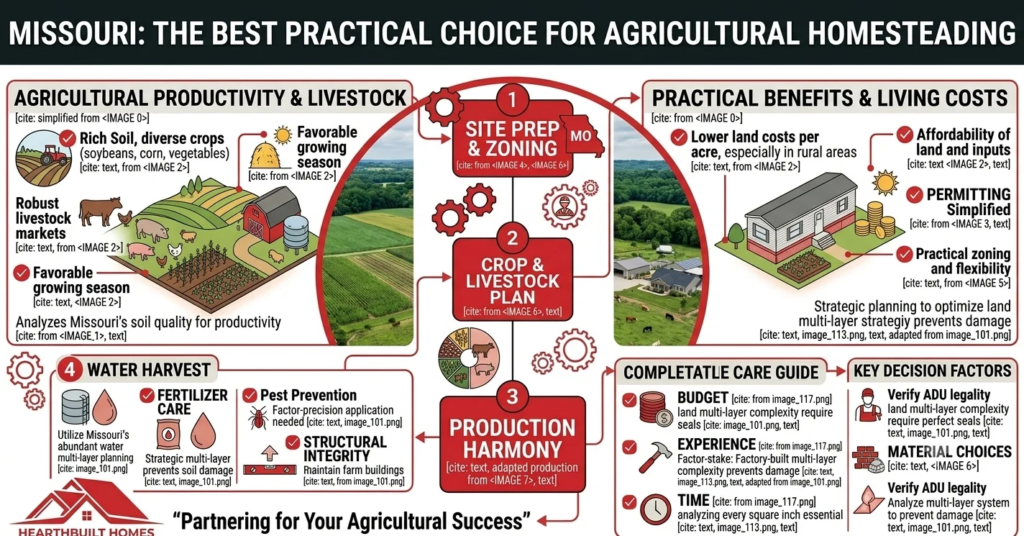
Missouri: The Best Practical Choice for Agricultural Homesteading
If your version of off-grid life includes a working garden and a small herd of livestock, Missouri is one of the easiest states for off grid living to actually farm. Consistent rainfall and rich soil mean less dependence on irrigation infrastructure.
- Unincorporated regions in the Ozarks often require zero structural building permits only a standard septic permit from the local health department.
- The forgiving climate makes it a strong pick for beginners transitioning from suburban life to full self-sufficiency.
- Humidity and pest pressure on crops and structures are the main downside to plan around.
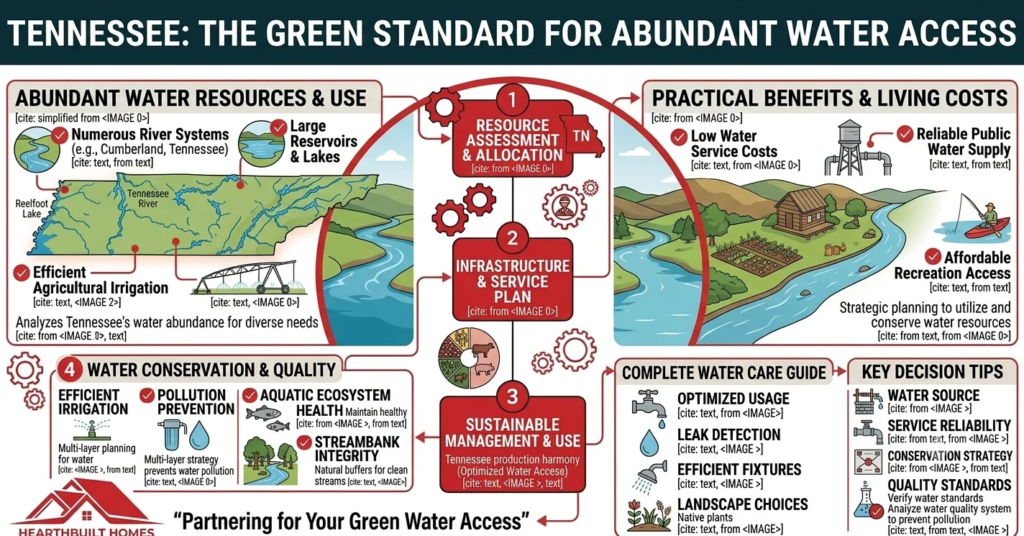
Tennessee: The Green Standard for Abundant Water Access
Tennessee earns its reputation among the states with the best off grid laws largely because of its water access. Riparian rights make rainwater harvesting straightforward, and dense wood lots support the classic timber-cabin aesthetic many homesteaders picture when they imagine off-grid life.
- Off-grid raw land entry points typically range from $35,000 to $55,000 for smaller, high-quality acreage.
- A perc test soil percolation testing that measures how well ground absorbs liquid is required before most septic installations, so budget time and money for that step before closing on wooded land.
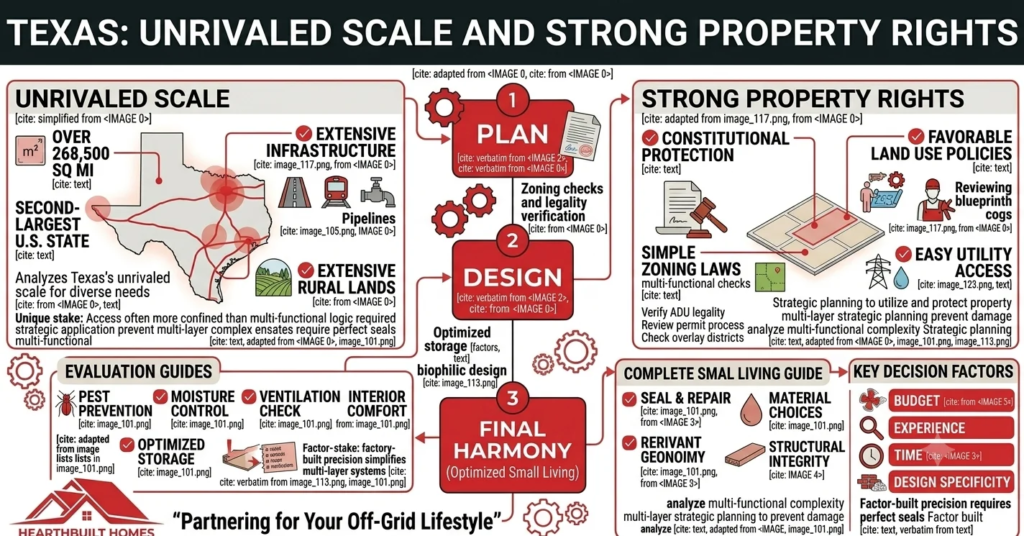
Texas: Unrivaled Scale and Strong Property Rights
Texas is less a single answer than an entire menu of off-grid options. Far West Texas counties like Hudspeth offer some of the cheapest land in the country paired with strong sun exposure, while East Texas leans toward timber, rainfall, and a greener homestead style.
- Texas’s constitutional protections for rural property owners are among the strongest in the nation, which matters if you ever face a dispute over land use.
- Well-drilling in arid West Texas regions can exceed 380 feet deep, with costs climbing past $15,000 a major line item to plan for upfront.
- Property taxes run higher than several neighboring off-grid-friendly states, so factor that into long-term cost projections.
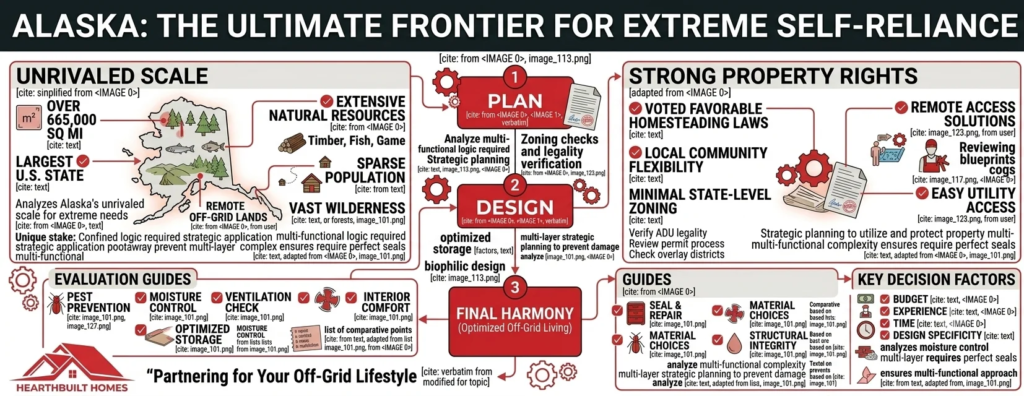
Alaska: The Ultimate Frontier for Extreme Self-Reliance
For homesteaders chasing total independence, Alaska is arguably the best state to homestead off-grid on paper. Entire unorganized boroughs have no zoning at all, no property taxes, and no restriction on outhouses, cabins, or modular builds.
- Zero zoning means near-total freedom in how and what you build.
- Winters demand serious thermal engineering high-R-value insulation and a secondary heating loop aren’t optional, they’re survival infrastructure.
- Short winter daylight hours mean solar alone can’t carry an off-grid system through the coldest months.