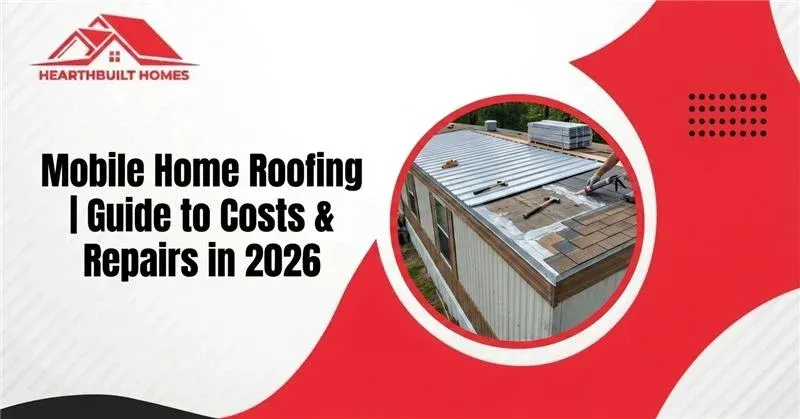
Nobody thinks about mobile home roofing until water starts dripping onto the living room sofa. For manufactured home owners, the roof isn’t just about curb appeal, it’s the primary defense against structural warping, ceiling damage, and runaway energy bills. Because manufactured homes sit on a steel chassis and use lighter, distinct framing, roofing for mobile homes works very differently from roofing on a traditional site-built house.
Whether you’re chasing a stubborn leak in an old aluminum roof or weighing a full mobile home roof replacement, this guide walks through the materials, realistic costs, DIY fixes versus hiring mobile home roofing contractors, and how to stretch your roof’s lifespan as far as it’ll go.
Understanding Mobile Home Roof Types and Shapes
Before pricing out a trailer roof replacement, it helps to know which category your home falls into. Roof shape drives almost every decision that follows material choice, drainage, and how often you’ll need repair for mobile homes down the road.
Flat and Bowstring Roofs
These are common on pre-1976 HUD-code homes. They’re typically capped in metal or an asphalt-based coating and have almost no slope, which means standing water is a constant threat. If your home falls into this category, ponding water is the single biggest cause of mobile home roof repair calls.
Pitched and Gabled Roofs
Modern single-wides and double-wides usually have a pitched or gabled profile, often built with a roof-over kit at some point in their life. These drain far better than flat designs and open the door to shingles or metal panels materials that simply aren’t practical on a flat roof.
HUD’s 1976 manufactured housing construction standards reshaped structural requirements for these homes, including roof load and wind resistance. Homes built before that date were governed by different, generally less stringent rules which is part of why older flat-roofed units tend to need more frequent attention.
Best Mobile Home Roofing Materials: Pros, Cons, and Costs
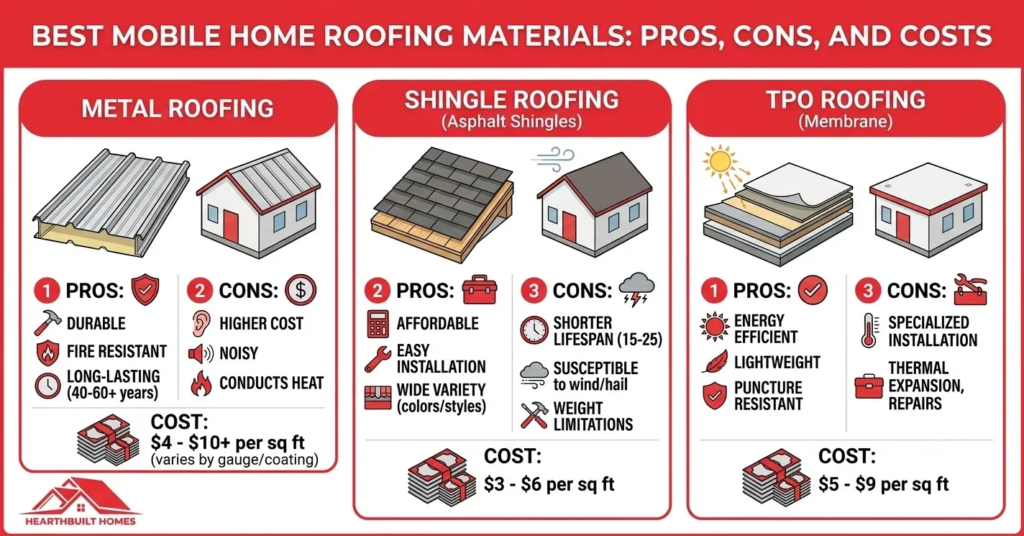
There’s no single “best” material for roofing for mobile homes; the right pick depends on your roof’s pitch, your climate, and your budget. Here’s how the major options stack up.
TPO (Thermoplastic Polyolefin) Single-Ply Membrane
TPO is the go-to choice for flat or low-slope roofs and one of the most requested upgrades among mobile home roofing companies today. It reflects heat well, which keeps cooling costs down, and forms a seamless, fully waterproof barrier when installed correctly.
- Pros: highly reflective, excellent for flat roofs, seamless waterproof barrier.
- Cons: needs professional heat-welding at the seams for best results not a great DIY project.
Metal Roofing (Aluminum or Steel Panels)
A metal roof on a mobile home is the closest thing to a “install it once and forget it” option. It handles snow loads well and routinely lasts 40 years or more with minimal maintenance.
- Pros: extremely durable, long lifespan, strong performance under heavy snow.
- Cons: can be noisy in heavy rain; higher upfront material cost than membrane systems.
Asphalt Shingles
Shingles give mobile homes a traditional, site-built look and remain one of the more affordable options for pitched roofs.
- Pros: familiar appearance, budget-friendly, easy to spot-repair one shingle at a time.
- Cons: only suitable on pitched roofs (a minimum 4:12 slope is recommended), and they add meaningful weight to the structure.
Liquid Roof Coatings (Elastomeric and Silicone) Rubber Roofing for Mobile Homes
Elastomeric and silicone coatings are often grouped under “rubber roofing for mobile homes” and are the most popular entry point for a DIY mobile home rubber roof project.
- Pros: great for DIY sealing, budget-friendly way to extend a roof’s life.
- Cons: a maintenance step, not a structural replacement; it buys time, it doesn’t fix rot or framing issues.
Material | Best For | Typical Lifespan |
TPO Membrane | Flat / bowstring roofs | 15–20 years |
Metal Panels | Pitched or flat roofs | 40+ years |
Asphalt Shingles | Pitched roofs (4:12+ slope) | 15–20 years |
Elastomeric / Silicone Coating | Maintenance & sealing | 3–10 years (reapplication needed) |
What Is a Mobile Home Roof-Over?
A roof-over mobile home installation means building a new roofing layer usually with an insulation barrier directly on top of the existing roof, instead of doing a full, messy tear-off. For many homeowners weighing a manufactured home roof replacement, this is the more affordable and less disruptive path.
Benefits of a roof-over include:
- An extra insulation layer, which can meaningfully lower cooling costs in summer.
- No exposed structure during construction, since the old roof stays in place as a barrier.
- Lower overall cost compared with a complete tear-off and rebuild.
A roof-over is not an option if the underlying wood decking or rafters are rotted. In that case, a full tear-off is mandatory so the framing itself can be repaired, covering rotted decking just hides the problem and lets it spread.
Mobile Home Roof Replacement Cost: What to Expect in 2026
The mobile home roof replacement cost you’ll pay depends on square footage (single-wide vs. double-wide), the condition of the decking underneath, your region’s labor rates, and the material you choose. Below are realistic 2026 ranges based on industry quote averages, adapted from roofing-association benchmarks (including data tracked by the National Roofing Contractors Association, modified for manufactured housing) for manufactured housing projects.
Project Type | Estimated Cost Range |
Elastomeric Coating (DIY vs. Pro) | $500 – $1,500 |
TPO Roof-Over (Single-Wide) | $3,000 – $5,500 |
TPO Roof-Over (Double-Wide) | $5,500 – $9,000 |
Metal Panels / Shingles (Full Replacement) | $6,000 – $12,000+ |
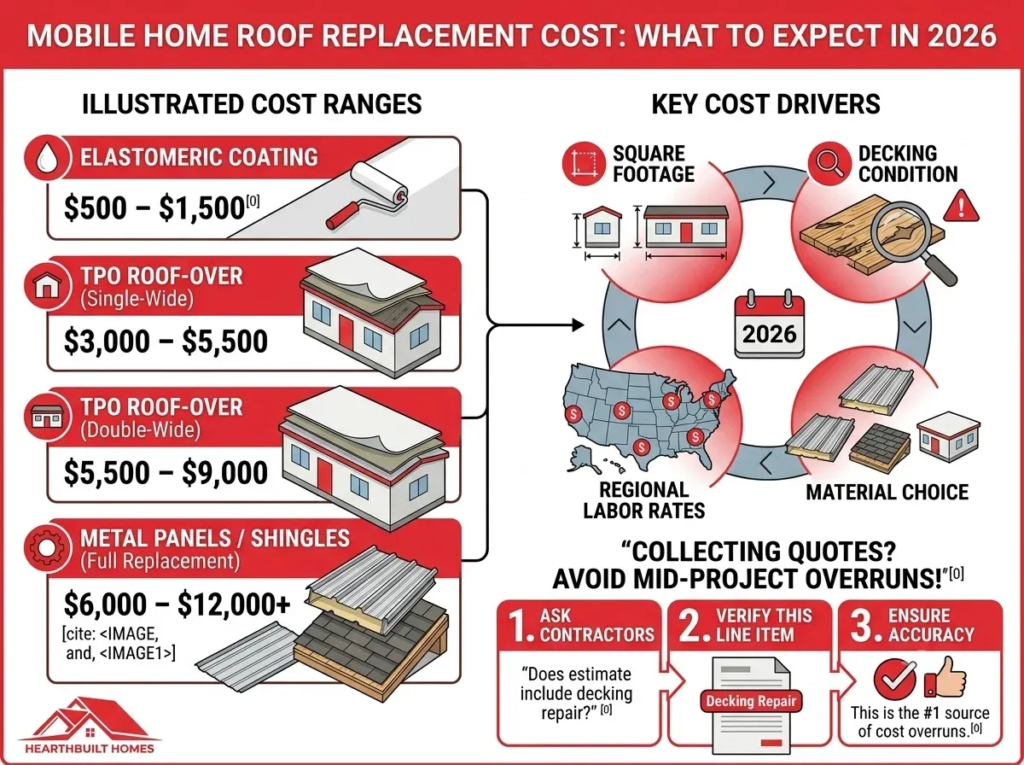
If you’re collecting quotes, it’s worth asking each of the mobile home roofing contractors near me you talk with whether their estimate includes decking repair and that line item is the most common source of mid-project cost overruns.
Signs Your Mobile Home Roof Needs Immediate Repair
Catching trouble early is the difference between a $500 mobile home roof repair cost and a five-figure replacement. Walk your roof’s interior and exterior periodically and watch for:
- Water stains on interior ceilings or walls, especially near the marriage line in double-wides.
- Soft spots or noticeable sagging when walking on the roof.
- Rusted metal panels or loose flashing around vents and seams.
- Ponding water that hasn’t evaporated within 48 hours.
DIY vs. Hiring a Professional Manufactured Home Roofer
Not every job calls for one of the mobile home roofers in your area but plenty do. Here’s a practical way to split the work.
What You Can DIY
- Annual sealing with an elastomeric or silicone coating.
- Clearing debris, leaves, and standing water before they cause damage.
- Minor patching with silicone or targeted repair tape on small punctures.
When to Call a Pro
- Full roof-overs that require structural planning and material expertise.
- Structural rafter repair where rot or damage has compromised the frame.
- Heat-welded TPO installation, which requires specialized equipment most homeowners don’t own.
Safety warning: manufactured homes have strict weight-distribution limits. Walking improperly on a weakened roof can crack ceiling joists and turn a simple repair into a structural emergency.
Protect Your Investment Before the Next Storm
Regular inspections and choosing the right material TPO for flat roofs, metal or shingles for pitched ones save homeowners thousands of dollars in long-term structural repairs. Whether you need a quick patch or a complete manufactured home roof replacement, getting ahead of small issues is always cheaper than reacting to a collapsed ceiling.
Ready to upgrade your home’s protection, comfort, and energy efficiency? Trust the experts who specialize in modern manufactured housing solutions. Visit HearthBuilt Homes today for professional advice, premium material options, and trusted installation services tailored exactly to your home’s unique structure.